Port Disruptions & Berthing Pressure: The Mediterranean Pattern That Keeps Costing Time (and Money)
Der Liegeplatzdruck im Mittelmeer ist ein sich wiederholendes Muster und kein Einzelfall: Bestätigte Slots werden mit einer Frist von 12 bis 24 Stunden neu gemischt, die Regeln für den Zugang und die Auftragnehmer in den Jachthäfen ändern sich ständig und die Warteschlangen für Treibstoff, Kräne und Zoll sorgen für Verzögerungen. Yachten, die Liegeplätze um 48, 24 und 6 Stunden bestätigen und einen Plan B bereithalten, verlieren am wenigsten.
Geschrieben von Amador Núñez
Mit KI-Unterstützung entworfen, dann vor der Veröffentlichung geprüft und bearbeitet von Amador Núñez.
Das Wichtigste
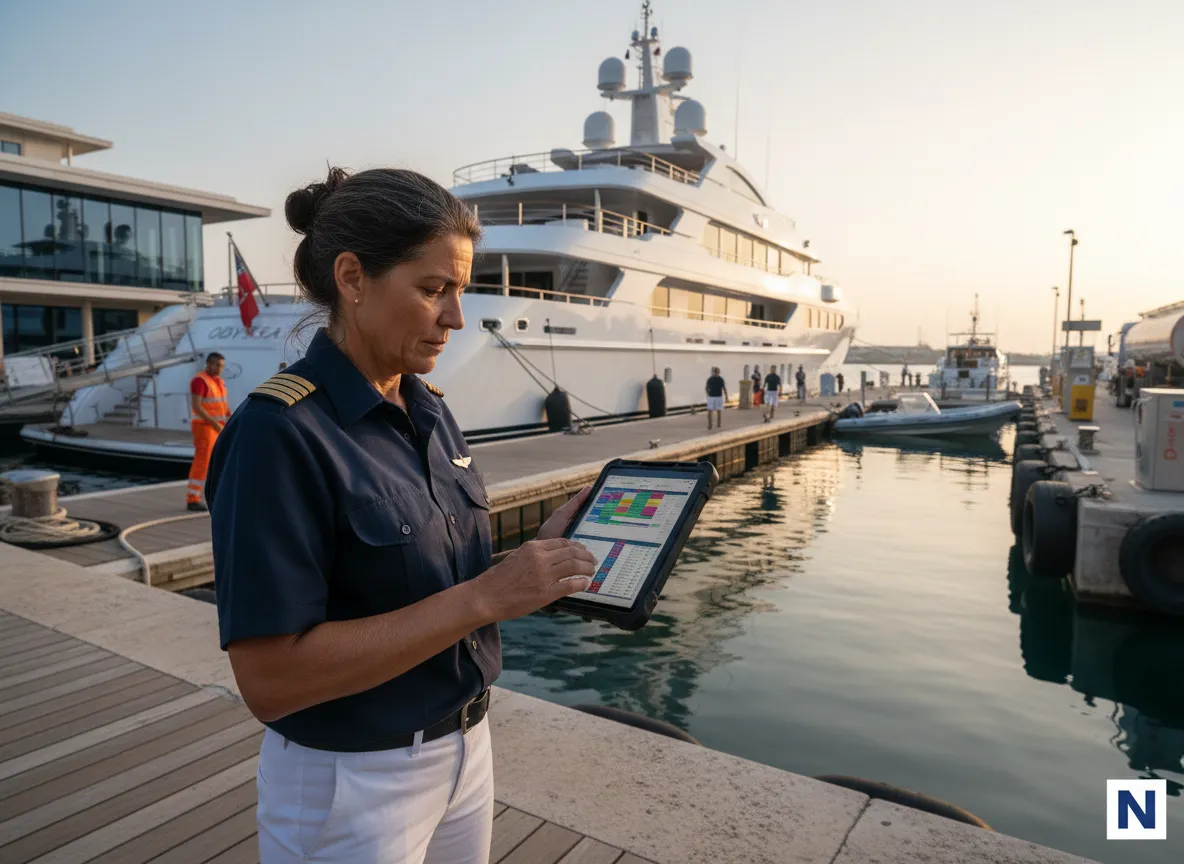
Ein Liegeplatzbestätigungsprotokoll um 48, 24 und 6 Stunden ist der einfachste Weg, um zu verhindern, dass ein Liegeplatzwechsel eine Hafenwoche ruiniert. Bestätigen Sie nach 48 Stunden den Liegeplatz und die Zugangsregeln zum Yachthafen. Bestätigen Sie innerhalb von 24 Stunden erneut, einschließlich des Zugangs des Auftragnehmers: Versicherungsschwellenwerte, Technikerausweise, Fahrzeugregeln und PSA. Überprüfen Sie nach 6 Stunden den Gate-Prozess, den genauen Lieferpunkt und die Person, die die Lieferung entgegennimmt. Dies ist vor allem für Kapitäne wichtig, die zwischen Jachthäfen wechseln, Gastaufenthalte planen oder Stapelwartungen durchführen, sowie für Lieferanten, die Techniker zu Jachthäfen entsenden, für die strenge Auftragnehmervorschriften gelten. Wenn sich ein Liegeplatz mit einer Frist von 12 bis 24 Stunden ändert, wird jede Aufgabe zu einer Eilaufgabe, und ein Lieferant ohne die richtigen Dokumente kann das gesamte Servicefenster am Gate verlieren. Kombinieren Sie das Protokoll mit einem fertigen Plan B-Liegeplatzpaket und einem 15-minütigen Morgenfoto von Liegeplatz, Besuchen, Lieferungen und Wetter, und die meisten Änderungen in letzter Minute werden zu einem überarbeiteten Plan und nicht zu einem verlorenen Tag.
The news-style reality (what keeps repeating)
- Berthing availability is tightening, even outside peak weeks. A “confirmed” slot becomes a “maybe” when a larger vessel arrives, a VIP movement triggers a reshuffle, or a marina changes allocation priorities.
- Port and marina rules keep shifting: documentation requirements, tender restrictions, security perimeters, waste/water procedures, working hours, access badges, contractor rules, and insurance thresholds.
- Congestion isn’t only about space—it’s about capacity to process: fuel dock queues, crane availability, pilotage/tow windows, customs/immigration timing, and the simple reality that the same handful of reliable service providers get booked out first.
- Last-minute changes cascade into everything else: crew duty hours, guest logistics, supplier access, parts delivery addresses, waste collection, and planned maintenance windows.
- The operational cost is hidden until it’s not: extra taxi transfers, overtime for crew and contractors, missed weather windows, wasted call-outs, and “urgent” shipping that becomes the default.
What it means for captains and owners
-
Time compression becomes the norm
When your berth changes with 12–24 hours’ notice, every task becomes a rush job: provisioning, bunkering, technician visits, waste/water, guest movements, and paperwork. Rushed operations create mistakes. -
Higher exposure to disputes and blame
When schedules shift, suppliers arrive to a closed gate, a delivery misses the slot, or a technician can’t access the vessel, the conversation quickly turns into: “Who confirmed this?” and “Who pays?” Without a clear audit trail, the captain ends up carrying the operational burden. -
Compliance and access risk increases
Many marinas now enforce stricter contractor rules (insurance certificates, IDs, vehicle registration, PPE, work permits). If a supplier is not properly documented, you lose time at the gate—and sometimes you lose the entire service window. -
Owner confidence is tested
Owners and managers don’t want excuses; they want control. Even when disruptions are outside your control, the expectation is that you have a plan, alternatives, and real-time updates.
What it means for suppliers
-
Wasted trips and dead time
A technician team arrives and can’t access the berth, the yacht moved, the security perimeter changed, or the captain is dealing with a port reshuffle. That’s lost hours and fuel—often unrecoverable. -
Quote-to-cash gets stretched
When the schedule changes, approvals delay, invoices get stuck, and payments slip. The supplier ends up financing the disruption. -
Reputation risk increases
Even when the disruption is not the supplier’s fault, the perception can become: “They didn’t deliver.” Suppliers need a system that documents access attempts, communications, revised ETAs, and agreed changes. -
Capacity planning becomes harder
If half your day is rescheduling around port access issues, you either overbook (and fail) or underbook (and lose revenue). The winners will be the suppliers who operate with tight scheduling + clear confirmation workflows.
Best practices (this week’s checklist)
-
Berth confirmation protocol (48h / 24h / 6h)
- Confirm berth and access rules at 48 hours
- Reconfirm at 24 hours (including contractor access)
- Final check at 6 hours (gate process + delivery address + contact person)
-
Create a “Plan B berth pack”
Keep a ready-to-send message with:- Vessel name, LOA, draft, ETA/ETD, contact numbers
- Service priorities (fuel, waste, urgent parts, technicians)
- Supplier list with insurance/credentials ready to share
This reduces chaos when the port changes your slot.
-
Lock supplier access requirements before dispatch
For each supplier visit, confirm:- Insurance threshold required by the marina
- ID requirements for each technician
- Vehicle access rules and time windows
- PPE rules and any restricted areas
If you don’t confirm this, you’re gambling with your schedule.
-
Time-box service windows (and document changes)
- Define arrival window + maximum waiting time
- Define what happens if access fails (reschedule, remote troubleshooting, alternative berth)
- Confirm any call-out fees in writing
This is how you prevent disputes later.
-
Parts and deliveries: stop using “the marina address” as a default
- Confirm the exact delivery point and receiving contact
- Confirm opening hours and acceptance rules
- If you might move berths, use a logistics plan that can follow the vessel
A delivery that arrives to the wrong gate is not “bad luck”—it’s a process gap.
-
Daily operational snapshot (15 minutes)
Every morning, align:- Today’s berth status
- Today’s supplier visits
- Deliveries
- Fuel/waste/water needs
- Weather constraints
This single habit prevents 80% of reactive firefighting.
How the Nautaes marketplace + marine ERP approach helps
-
Verified suppliers reduce access failure
When suppliers are properly verified (documentation, insurance, credentials), you reduce the risk of being blocked at the gate. Verification is not marketing—it’s operational continuity. -
Faster matching when Plan A fails
When a berth changes and your original supplier can’t reach you, the ability to quickly source an alternative—already vetted—keeps the operation moving. -
Structured quote → approval → job → invoice flow
Disruptions create changes. Changes create disputes. A structured workflow records:- what was requested
- what was quoted
- what was approved
- what changed and when
- what was delivered
This protects both captain and supplier.
-
Real-time coordination without losing the audit trail
Chat is useful, but it becomes messy when things go wrong. Operational records (requests, confirmations, delivery proof, job updates) keep accountability clear. -
Operational continuity across ports
The Med is not one port. It’s many micro-systems. A consistent operational platform means your process stays stable even when the port rules change.
Recommendation (best practice)
Build your weekly operational plan around the expectation that something will shift—then design your workflow so that shifts don’t break execution.
- Always maintain a verified supplier bench (not a single favourite)
- Always document confirmations and changes
- Always run a short daily snapshot to align crew + suppliers
- Always keep a Plan B berth pack ready