MARINE RADAR SYSTEMS: COMPREHENSIVE COMPARISON
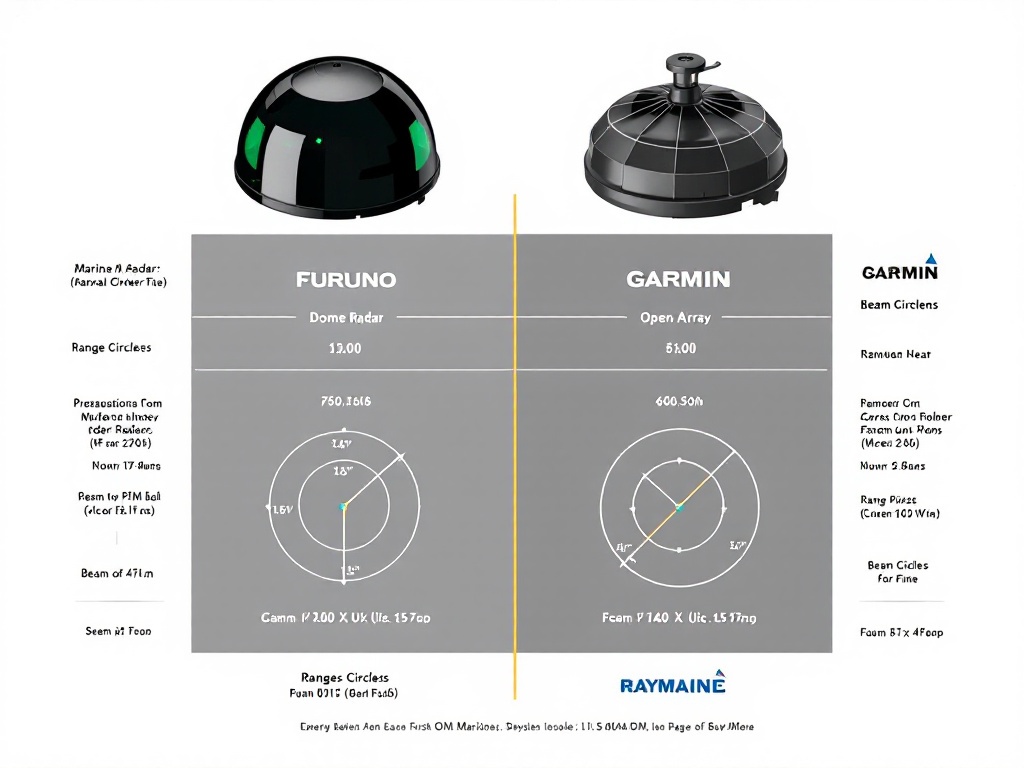
- Solid-State vs. Magnetron Technology
Solid-State Radar Systems:
- Modern solid-state radars use CHIRP pulse compression technology, offering instant power-up capability and significantly reduced power consumption (typically 20-40W) compared to traditional magnetron systems
- Initial investment is higher, with prices ranging from $2,500 for basic dome units to $15,000+ for advanced open array systems, but operating costs are lower due to no magnetron replacement requirements
- Typical lifespan exceeds 10,000 hours of operation, requiring minimal maintenance beyond occasional software updates and external cleaning
- Advanced signal processing provides superior target separation and clearer images in adverse weather conditions.
Magnetron Systems:
- Traditional magnetron technology requires 2-3 minute warm-up time and consumes more power (150-200W), but often provides better performance in heavy rain conditions
- Lower initial cost, ranging from $1,500 for basic units to $8,000 for commercial-grade systems, but requires magnetron replacement every 2,000-4,000 hours at $500-800 per unit
- Installation costs are generally higher due to heavier units and higher power requirements
- Still preferred in some commercial applications due to proven reliability and familiar operation
- Major Manufacturers Comparison
Furuno:
- NXT series solid-state radar ranges from $3,500-18,000, featuring advanced target tracking and bird mode for fishing
- DRS series offers both solid-state and magnetron options, with superior heavy weather performance
- Professional-grade systems include unique dual-range capability with simultaneous short and long-range operation
- Installation costs typically 20-30% higher due to more complex setup requirements and calibration needs
Garmin:
- Fantom series solid-state radars range from $2,800-15,000, featuring MotionScope Doppler technology
- Excellent integration with Garmin MFDs and advanced networking capabilities
- User-friendly interface with automated setup features reduces initial configuration time
- Installation costs average $1,500-3,000 depending on vessel size and complexity
Raymarine:
- Magnum open-array and Quantum dome radars range from $2,500-12,000
- Advanced CHIRP pulse compression technology offers superior target separation
- Quantum 2 series features Doppler collision avoidance technology
- Installation costs typically $1,800-3,500 including network integration
- Performance Specifications
Range and Resolution:
- Entry-level dome radars (2kW-4kW) provide effective range of 24-36 nautical miles with target separation of 20-30 meters
- Mid-range open array systems (4kW-6kW) offer ranges up to 48-64 nautical miles with target separation down to 10-15 meters
- High-end commercial systems (12kW-25kW) can reach ranges of 96+ nautical miles with superior target separation of 5-8 meters
- Beam width varies from 3.5-7° for dome radars and 1.8-4° for open array systems, affecting target discrimination capability
- Advanced Features
Modern Capabilities:
- Doppler processing enables instant identification of moving targets with color coding for approach/retreat indication
- Bird mode for fishing vessels can detect flocks up to 3-5 nautical miles away, indicating potential fishing grounds
- Automatic radar plotting aid (ARPA) tracks up to 100 targets simultaneously, providing collision avoidance data
- Dual range operation allows simultaneous short and long-range monitoring on compatible systems
- Installation Requirements
Mounting Considerations:
- Height requirements vary by model but typically require 8-15 feet above waterline for optimal performance
- Power cable specifications range from 10AWG to 6AWG depending on cable run length and unit power requirements
- EMI (Electromagnetic Interference) considerations require careful placement away from other electronics
- Professional installation recommended for warranty coverage and optimal performance


