Safety & Compliance — When Requirements Tighten Mid-Season
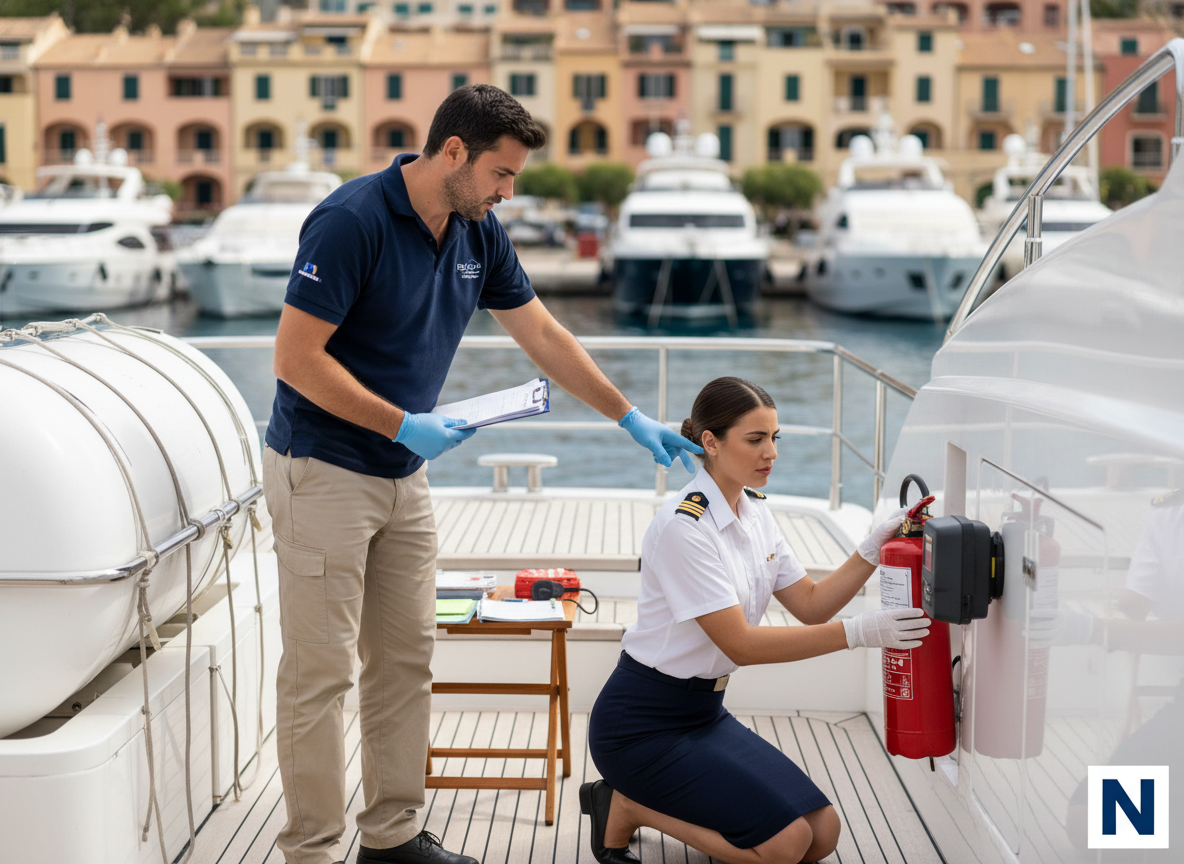
The news-style reality (what keeps repeating)
Every year, safety and compliance pressure increases in small, practical ways. Insurers request more evidence, ports ask for clearer documentation, and servicing intervals are enforced more strictly. The “paperwork” is no longer a back-office task; it’s operational, time-sensitive, and often required at short notice.
Most compliance failures aren’t negligence. They’re workflow failures: certificates scattered across inboxes, servicing dates drifting, and the yacht being in the wrong place when a technician is available.
What it means for captains and owners
The operational risk is simple: a missed service can block a charter, delay a departure, or trigger insurance complications. The fix is not more effort; it’s better structure. Treat compliance like inventory: tracked, scheduled, and visible.
Captains who stay calm under compliance pressure usually have two habits. First, they keep a single source of truth for dates and documents. Second, they book servicing in shoulder windows before the season becomes crowded.
What it means for suppliers
For suppliers, compliance work is a trust business. Captains don’t just want the service done; they want the certificate, the serial numbers, the photos, and the traceability. Suppliers who can deliver documentation quickly and consistently become the default choice.
If you’re a supplier, your report template matters. A clean, complete certificate set is what gets you called again.
Best practices (this week’s checklist)
- Build a compliance calendar: liferaft, EPIRB, SART/AIS, extinguishers, fixed fire, medical kit, and emergency lighting checks.
- Standardise evidence storage: one folder structure, consistent filenames, renewal dates in the file name.
- Pre-brief suppliers: model/serial numbers, access constraints, and preferred service windows.
- After every service: capture photos, certificates, and a short work summary for the log.
- Run a monthly “inspection simulation”: can you produce every key certificate in 10 minutes?
How the Nautaes marketplace + marine ERP approach helps
The Nautaes marketplace helps captains find verified, compliant providers quickly—especially when the yacht is moving and time is tight. Instead of guessing who is legitimate, captains can source from a network designed for professional operations.
A marine ERP approach then keeps the compliance chain intact: service requests, confirmations, certificates, and invoices connected to the asset and date. That’s how you avoid the classic problem of “we did it, but we can’t prove it.”
Recommendation (best practice)
Treat compliance as a weekly habit, not an annual panic. The goal is to make inspections boring—because boring means controlled.
CTA
Don’t let compliance become a last-minute scramble. Use the Nautaes marketplace to book verified providers and manage the evidence like a marine ERP—clean, complete, and ready.

Friendly & suitable opinions

Quality work done faster


