Port Disruptions Are the New Normal: How Captains, Owners, and Suppliers Keep Operations Moving
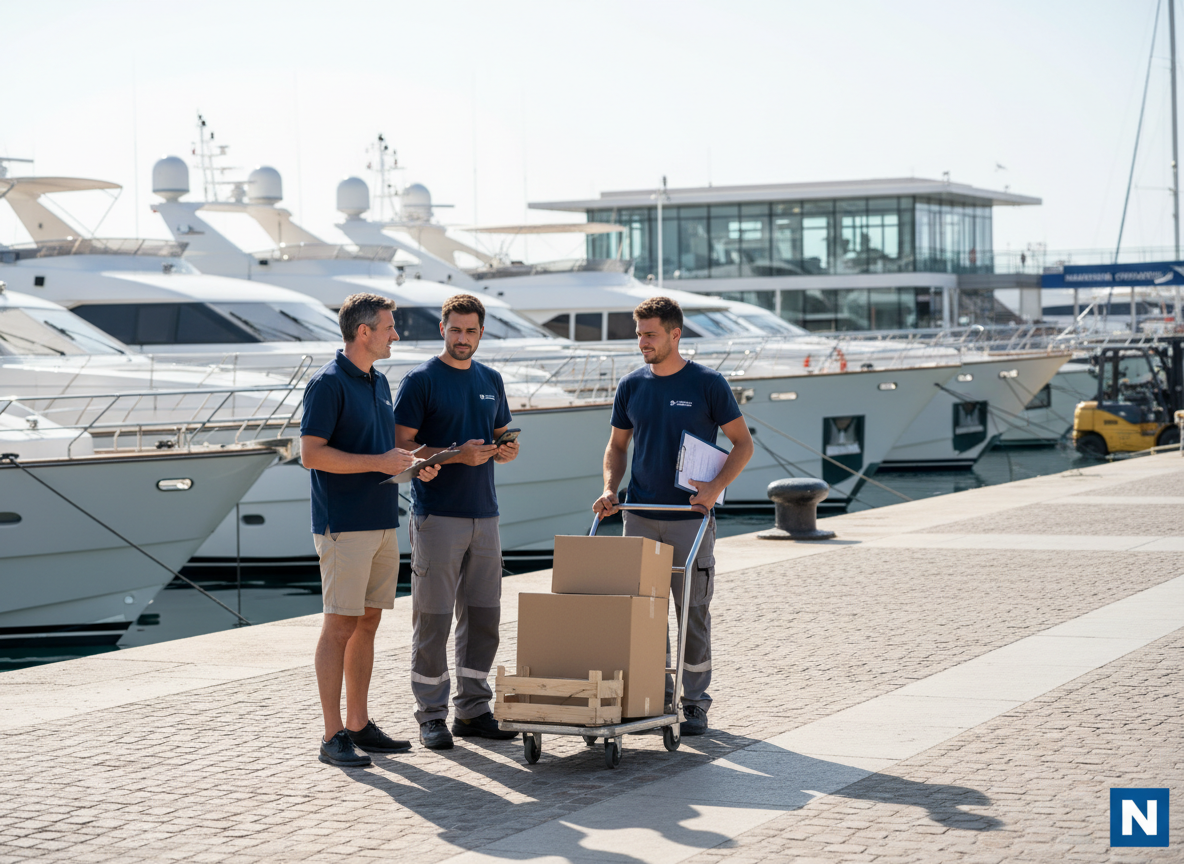
The news-style reality (what keeps repeating)
If you run yachts in the Mediterranean (and increasingly beyond), you’ve seen the same pattern repeat—week after week, port after port:
- Berth plans change late: a port authority restriction, a local event, a weather system, a technical incident, or a marina policy update and suddenly your confirmed plan becomes “we’ll see”.
- Congestion compresses schedules: when traffic stacks up, everyone tries to do the same thing at the same time—bunkering, provisioning, parts deliveries, waste pump-out, water, technicians onboard, surveys, inspections.
- Suppliers get squeezed: a supplier can be excellent, verified, and responsive—but if the yacht shifts location or loses the slot, the supplier’s day collapses. Then the next available window is not tomorrow; it’s “next week if we’re lucky”.
- Small delays become expensive: one missed delivery slot triggers re-delivery fees, extra taxi hours, overtime, wasted call-outs, and crew time burned on coordination rather than running the vessel.
- Documentation and approvals lag behind reality: the operational truth changes faster than the paperwork trail. That’s where disputes, misunderstandings, and “who authorised this?” conversations start.
This is not dramatic. It’s simply the operational environment now: berthing is a variable, not a fixed input. Treat it as such and you stay in control. Treat it as fixed and you spend your week reacting.
What it means for captains and owners
For captains, the impact is immediate and practical:
-
Your critical path is no longer just technical
The job might be straightforward—filters, pumps, electronics, paint, safety gear—but the critical path becomes access: berth, time window, permissions, delivery acceptance, and the ability to host technicians onboard safely and legally. -
Owner expectations need operational framing
Owners often see delays as “supplier issues” or “crew planning issues”. In reality, the constraint is frequently port access and timing. The best captains translate this into a clear operational narrative:- What changed
- What it affects (time, cost, risk)
- What you’re doing about it (options, trade-offs, next decision point)
-
Risk moves from ‘rare’ to ‘routine’
When disruptions are frequent, you stop managing exceptions and start managing a system. That means you need:- A repeatable process for requests and approvals
- A single source of truth for supplier comms, quotes, and job status
- Evidence trails (who said what, when, and what was delivered)
-
The hidden cost is crew bandwidth
The biggest operational leak is not the delivery fee—it’s the captain/engineer time spent chasing messages across WhatsApp, email, phone calls, and broker chains. That time should be spent on safety, readiness, and real maintenance oversight.
For owners, the bottom line is simple: uncertainty is expensive. The more fragmented the coordination, the more you pay in inefficiency, rework, and avoidable disputes.
What it means for suppliers
Suppliers feel this pressure differently, but just as sharply:
-
Your schedule is only as good as the berth
If the yacht moves, loses the slot, or changes access rules, your technicians lose productive hours. You can be “on time” and still fail the job because the environment changed. -
You need tighter pre-visit confirmation
The suppliers who win are the ones who confirm the operational basics early:- Exact location and access procedure
- Onboard contact and safety requirements
- Delivery acceptance process
- Parking/port passes if needed
- Time window with a realistic buffer
-
Documentation protects margin
When disruptions happen, margin disappears fast. Clear quotes, clear scope, clear acceptance steps, and documented changes are what keep you paid without arguments. -
Reputation is now operational reliability
In this environment, “good work” is expected. What differentiates suppliers is reliability under pressure: fast response, clear comms, and the ability to adapt without chaos.
Best practices (this week’s checklist)
Use this checklist as your weekly operational standard—simple, repeatable, and designed for disruption.
A) Berthing as a live risk register
- Confirm berth status 72h / 48h / 24h before any critical delivery or visit
- Maintain Plan A / Plan B locations (even if Plan B is “anchorage + tender logistics”)
- Identify port constraints early: working hours, access rules, security, waste/water restrictions
B) Supplier windows that survive disruption
- Book supplier windows with a buffer, not a tight slot
- Confirm technician arrival requirements (passes, PPE, onboard escort)
- Pre-approve alternative timing: “If we slip 6 hours, can you still come same day?”
C) Delivery control (avoid the ‘lost box’ week)
- Standardise delivery instructions: who receives, where it goes, how it’s signed for
- Require photo proof on delivery for critical parts
- Track: ordered → shipped → arrived → accepted → installed → tested
D) Quote scope and change control
- Quotes should separate parts, labour, and other charges
- Any change due to access delays or berth changes should be logged as:
- reason
- impact (time/cost)
- approval status
E) Dispute prevention (before it becomes a dispute)
- Keep a single thread of truth for: request, quote, acceptance, job notes, completion evidence
- Capture completion evidence: photos, checklist, signatures where appropriate
- Define acceptance criteria: what “done” means operationally
How the Nautaes marketplace + marine ERP approach helps
When disruption is normal, the goal is not to “avoid disruption”. The goal is to reduce the cost of disruption—time, confusion, rework, and disputes.
A marketplace alone can help you find suppliers. An ERP alone can help you track jobs. The operational advantage comes from combining both:
-
Structured requests instead of scattered messages
You create a service or parts request with the right operational context. That means less back-and-forth, fewer missing details, and faster supplier alignment. -
Verified suppliers and clear accountability
You’re not guessing who is reliable. Verification and performance expectations reduce risk—especially when time windows are tight. -
Quotes, visits, and job progress in one operational flow
When the berth changes, you don’t lose the thread. You can reschedule, update, and keep the evidence trail intact—without rewriting the story across five channels. -
Delivery and service records that protect both sides
Captains get traceability. Suppliers get proof. Owners get clarity. That is how you prevent disputes and keep payments aligned with reality. -
Operational continuity across ports and seasons
The Med season is intense, but the same problems appear everywhere. A standard operational system is what scales—whether you’re in Palma, Antibes, Genoa, Athens, or moving offshore.
Recommendation (best practice)
Run every berth-dependent job with a “two-confirmation rule”:
- Confirmation 1 (planning): confirm berth/location and access requirements when the request is created and the supplier window is booked.
- Confirmation 2 (execution): reconfirm 24 hours before arrival/delivery with a clear go/no-go decision and a fallback plan.
This one habit reduces wasted call-outs, missed deliveries, and “we thought you were here” confusion more than any other operational tweak.
CTA
If you’re tired of losing hours to coordination chaos every time the port plan changes, move your requests, quotes, visits, and delivery tracking into one operational workflow.
Use Nautaes to:
- Find and work with verified marine suppliers
- Keep requests and quotes structured and auditable
- Track deliveries and jobs across changing berths and schedules
- Reduce disputes by keeping the evidence trail clean


