The Mediterranean Refit Squeeze: Parts Lead Times, Port Pressure, and Why “Good Enough Planning” Is Now Expensive
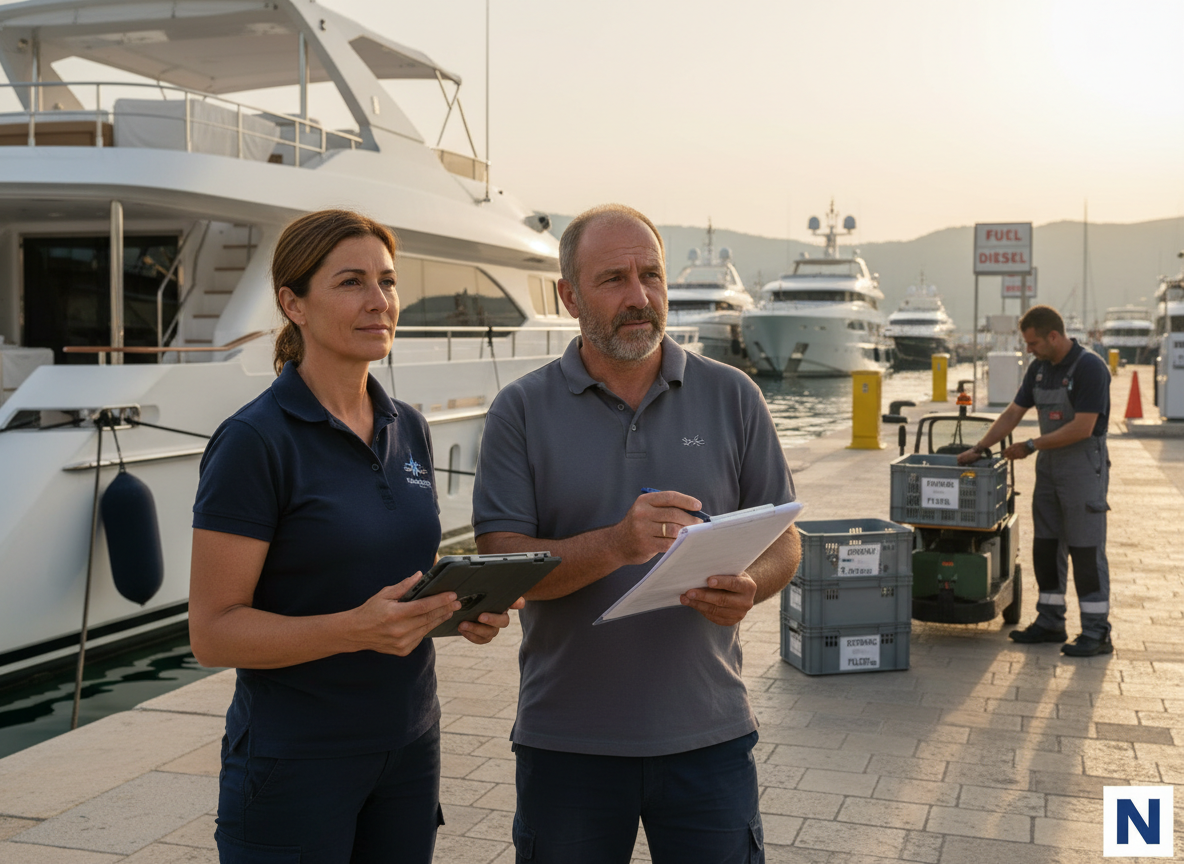
What it means for captains and owners
For captains, the operational risk is no longer just technical—it’s coordination risk.
- Owners want certainty, but the environment is probabilistic. The only way to protect trust is to show a professional operational system: clear scopes, documented approvals, and proactive contingency planning.
- The captain becomes the integration layer. You’re coordinating suppliers, crew, port agents, yards, deliveries, and owner expectations. If your workflow is fragmented, you’ll spend your time chasing updates instead of running the vessel.
- Time lost becomes cost in multiple places. A delayed part isn’t just a delayed repair. It can mean:
- additional berth fees
- wasted labour hours waiting onboard
- rescheduled surveys/inspections
- missed charter windows
- reputational damage with owners/management companies
- Your leverage depends on clarity. When you can show: request date, quote approval date, delivery ETA changes, and who confirmed what—your decisions are easier to defend.
Operationally: captains who run refit and maintenance like a controlled pipeline (not a chat thread) keep the vessel moving.
What it means for suppliers
For suppliers, the same pressure shows up differently: margin and trust are being squeezed at the same time.
- Customers are less patient, not less reasonable. Captains can accept delays; they struggle with uncertainty. “We don’t know” is the killer.
- Quoting speed is now a competitive advantage. The supplier who can respond quickly with a clear scope, lead time assumptions, and alternatives wins—even at a higher price.
- Proof of professionalism matters. Insurance, certifications, VAT registration, and a track record of reliable delivery are becoming the baseline, not the differentiator.
- Disputes are often process failures, not technical failures. Missing sign-offs, unclear inclusions/exclusions, and undocumented changes are what create payment friction.
Suppliers who systemise quoting, documentation, and updates will outperform those relying on relationships alone.
Best practices (this week’s checklist)
Use this checklist for any job involving parts + labour + a deadline (refit, repair, commissioning, class-related work).
1) Define the job in operational terms (not just “fix it”)
- Minimum: symptom, asset/system, urgency, location/ETA, access constraints
- Add: photos/video, serial numbers, part numbers if known
- Confirm: who approves scope changes onboard (captain, chief, owner rep)
2) Build a two-track plan: labour plan + parts plan
- Labour: earliest start date, estimated hours, dependencies (power shutdown, crane, diving, yard access)
- Parts: availability status, shipping method, customs/VAT assumptions, delivery address and receiving hours
3) Force a “lead time truth check” before you commit
Ask suppliers to confirm one of these explicitly:
Ask suppliers to confirm one of these explicitly:
- In stock (where?) and reserved for your order
- Not in stock; confirmed manufacturer lead time
- Alternative compatible part available now
If it’s not confirmed, treat it as a risk item.
4) Lock the acceptance criteria
- What counts as “job complete”?
- What tests will be performed?
- What documentation will be provided (invoice, service report, warranty terms, photos)?
5) Pre-agree the change-order rule
- “No additional work without written approval” is not bureaucracy—it’s protection for both sides.
- Agree the channel for approvals (platform, email) and who can authorise.
6) Delivery discipline
- Confirm delivery point (marina office vs dock vs vessel)
- Confirm who can sign and what happens if delivery is incomplete
- Photograph deliveries at receipt (labels + contents)
7) Payment and dispute readiness
- Align payment terms before work starts
- Keep a clean timeline of: request → quote → approval → work → sign-off
- If something goes wrong, document first, argue later.
How the Nautaes marketplace + marine ERP approach helps
Nautaes is built for the reality above: captains and suppliers operating under time pressure, with high consequences for small failures.
Marketplace layer (finding the right supplier fast)
- Match captains with verified marine service providers (documentation-backed)
- Reduce time wasted on unqualified leads and “maybe we can do it” replies
- Support multilingual operational requests so details don’t get lost in translation
Marine ERP approach (running the job like a controlled workflow)
Instead of scattered messages, you run a single operational chain:
Instead of scattered messages, you run a single operational chain:
- Request: structured details + attachments
- Quotation: clear scope, lead time assumptions, inclusions/exclusions
- Approval: documented sign-off (who approved, when)
- Invoice & payment: clean paperwork, fewer surprises
- Delivery & confirmation: receiving discipline and proof
- Dispute management: evidence-based, time-boxed, fair to both sides
The outcome is not “more admin”. The outcome is less chaos: fewer misunderstandings, faster decisions, and a defensible operational record when timelines shift.
Recommendation (best practice)
Adopt a simple rule onboard for the next 30 days:
If it involves parts + time pressure, it must live in one workflow—not across WhatsApp, email, and memory.
That means every job has:
- one source of truth for scope
- one approval trail
- one place to track lead time changes
- one place to store evidence (photos, delivery notes, service reports)
This is how you protect owner confidence while operating in an unstable supply chain.
CTA
If you’re a captain: post your next parts + labour request on Nautaes and work only with verified suppliers—faster quotes, cleaner approvals, and fewer surprises.
If you’re a supplier: get verified and respond with structured quotes—you’ll win more jobs by being clear, fast, and operationally reliable.
If you’re a supplier: get verified and respond with structured quotes—you’ll win more jobs by being clear, fast, and operationally reliable.
Nautaes is built by captains, for captains—so the system matches the reality on the dock.


