Port Disruptions Don’t “Happen” — They Repeat: Berthing Bottlenecks, Last‑Minute Shifts, and the Cost of Being Unprepared
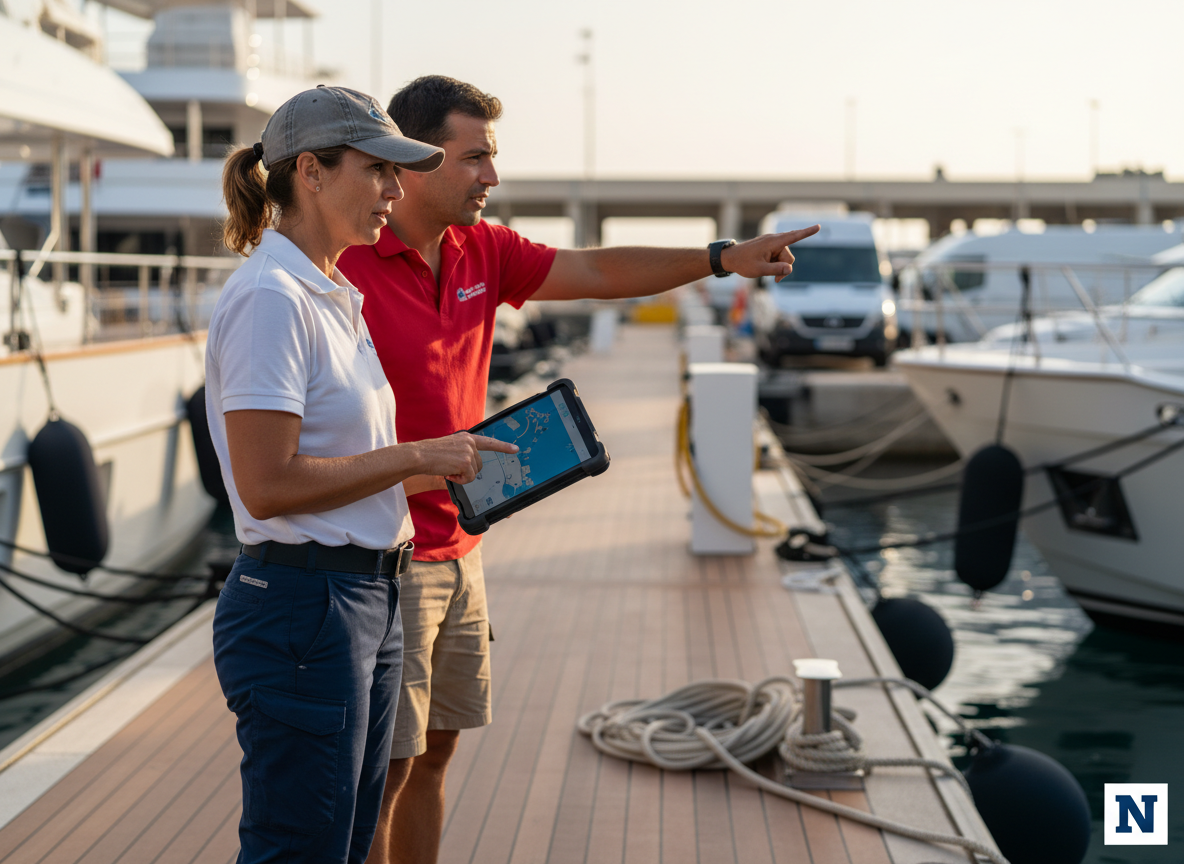
The news-style reality (what keeps repeating)
If you’ve been running yachts in the Med (or doing cross‑Med hops into the Atlantic) you’ve seen the same pattern on repeat: the port plan looks stable until it isn’t.
- A berth confirmation arrives late, then changes again.
- A neighbour yacht’s movement triggers a domino effect on the dock.
- A harbour master prioritises a different arrival window.
- A weather shift compresses arrivals into the same few hours.
- A refit slot slips, and suddenly everyone is “urgent” at once.
None of this is new. What is changing is how quickly the disruption cascades into cost and risk.
A single berth change can trigger:
- supplier ETAs becoming wrong,
- access permits needing re-issuing,
- technicians missing the boat,
- parts arriving to the wrong gate,
- waste/water/fuel logistics being rescheduled,
- crew duty hours being stretched,
- and owners asking why “a simple job” is now a multi-day problem.
Operationally, the real issue isn’t the disruption itself. It’s the lack of a reliable, repeatable system to execute under disruption — across multiple suppliers, multiple jobs, and multiple stakeholders — without losing control.
What it means for captains and owners
For captains, berthing disruption is not a “marina issue”. It’s an execution issue that lands on your shoulders.
1) Time compression becomes the default
When the berth window shifts, everything compresses: deliveries, technicians, inspections, sign-offs. You end up managing five critical paths in a two-hour slot.
When the berth window shifts, everything compresses: deliveries, technicians, inspections, sign-offs. You end up managing five critical paths in a two-hour slot.
2) Risk increases quietly
The biggest risks aren’t dramatic. They’re subtle:
The biggest risks aren’t dramatic. They’re subtle:
- rushed work without proper evidence,
- incomplete checklists,
- missing signatures,
- confusion over who approved what,
- and disputes later when the yacht is already gone.
3) Owners feel uncertainty, not complexity
Owners rarely care about the operational detail. They feel:
Owners rarely care about the operational detail. They feel:
- delays,
- lack of clarity,
- and “why are we paying for chaos?”
Your job becomes translating disruption into calm control: clear options, clear cost, clear next steps.
4) The hidden cost: supplier reliability becomes your reputation
Even if a supplier is the one who fails to show up or respond, the owner sees your operation. In busy ports, the difference between “handled” and “messy” is usually one thing: response time and coordination.
Even if a supplier is the one who fails to show up or respond, the owner sees your operation. In busy ports, the difference between “handled” and “messy” is usually one thing: response time and coordination.
What it means for suppliers
For suppliers, port disruption is both a threat and an opportunity.
1) The winners are operationally fast, not just technically good
In congested ports, captains don’t choose the “best brochure”. They choose the supplier who can:
In congested ports, captains don’t choose the “best brochure”. They choose the supplier who can:
- confirm availability quickly,
- give a realistic ETA,
- show up with the right kit,
- document the job properly,
- and close it cleanly.
2) Quoting delays become lost revenue
When berth windows shift, the captain’s decision window shrinks. If your quote arrives late, the job goes elsewhere — not because you’re expensive, but because you were slow.
When berth windows shift, the captain’s decision window shrinks. If your quote arrives late, the job goes elsewhere — not because you’re expensive, but because you were slow.
3) Access and compliance become part of the product
Technicians missing access rules, marina procedures, or onboard protocols creates friction. In high-end marinas, friction equals rejection.
Technicians missing access rules, marina procedures, or onboard protocols creates friction. In high-end marinas, friction equals rejection.
4) Disputes increase when documentation is weak
Under time pressure, evidence gets skipped. Then:
Under time pressure, evidence gets skipped. Then:
- “Was it done?”
- “Who approved it?”
- “Why is the invoice higher?”
You don’t want to fight these battles after the yacht has departed.
Best practices (this week’s checklist)
Use this as a weekly operational discipline — especially during high traffic periods (season peaks, event weeks, weather windows).
-
Berth volatility score (per port)
- Rate each upcoming port call: Low / Medium / High volatility
- High volatility = pre-brief suppliers that timing may shift
-
Arrival plan in one page
- ETA window, berth plan, access gate, contact chain
- Share it once, update it centrally (avoid WhatsApp chaos)
-
Supplier readiness confirmation (24–48h before)
- Confirm: availability, tools, parts, access requirements, onboard contact
- If they can’t confirm clearly, treat it as a risk
-
Two-option scheduling
- For critical jobs: schedule Option A (primary) + Option B (fallback window)
- Make the fallback explicit, not implied
-
Delivery control
- Confirm delivery address and marina gate procedure
- Require proof of delivery (photo/QR/confirmation) where possible
-
Evidence-first execution
- Before work starts: define what “done” looks like (photos, readings, checklist items)
- After work: capture evidence immediately, not “later”
-
Signature discipline
- Ensure sign-off is captured while the technician is still present
- No signature = future dispute risk
-
Invoice alignment
- Match invoice line items to quote and job evidence
- If scope changed, document who approved it and when
How the Nautaes marketplace + marine ERP approach helps
Berthing disruption is exactly where a marketplace alone is not enough — and where an ERP alone is not enough. You need both: verified access to the right suppliers and a workflow to execute cleanly.
With Nautaes, the operational advantage is built around:
- Verified suppliers (so you’re not gambling on unknown providers when time is tight)
- Fast service request flow (captains can request, compare, and move quickly)
- Direct captain–supplier communication (no intermediaries, no commission-driven delays)
- Structured job lifecycle (request → quote → job → visits → checklists/evidence → signature → invoice)
- Operational documentation that reduces disputes and protects both sides
- Supplier dashboards and workflows that reward speed, clarity, and execution quality
In short: when the berth changes, you don’t need more messages — you need a system that keeps the job moving and keeps the audit trail intact.
Recommendation (best practice)
Adopt a “disruption-ready” operating standard: every critical job must have a confirmed supplier, a documented execution plan, and a defined evidence package before the yacht arrives.
This is the difference between:
- reacting to the port, and
- running the port call.
Captains: you protect owner confidence and reduce operational stress.
Suppliers: you become the provider captains call first — because you’re reliable under pressure.
Suppliers: you become the provider captains call first — because you’re reliable under pressure.
CTA
If you’re operating in the Mediterranean (or moving between regions) and you’re tired of last‑minute berth changes turning into operational chaos: use Nautaes to run service requests and execution with verified suppliers and a workflow that holds under disruption.
- Captains: keep control, reduce risk, save time.
- Suppliers: win more jobs by responding faster and closing cleaner.
Go to nautaes.com and run your next request through Nautaes.


