Berth Disruptions Are the New Normal: How Captains and Suppliers Stay Operational When the Port Says “Not Today”
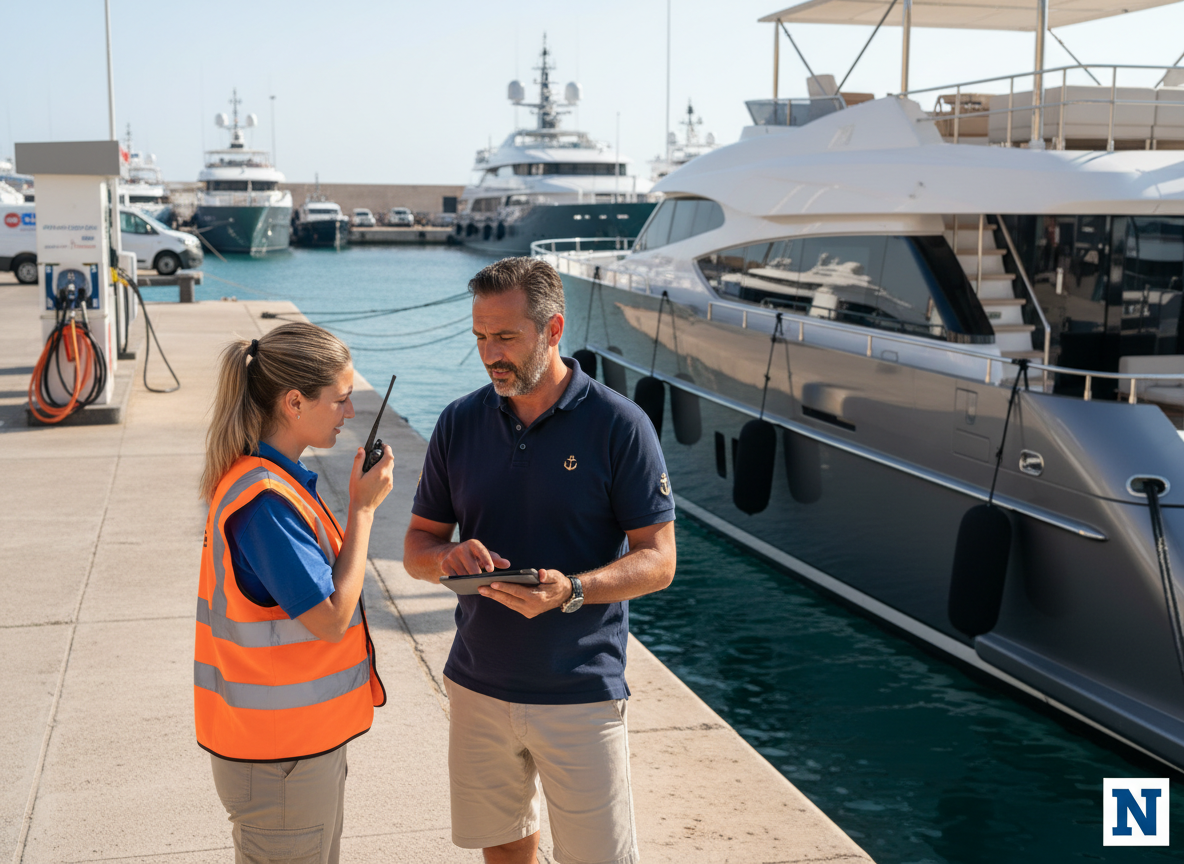
The news-style reality (what keeps repeating)
Across the Mediterranean (and increasingly beyond), the same story keeps playing out—regardless of whether you’re running a 24m private yacht or a 70m charter programme:
- Berths are “confirmed”… until they aren’t. A last-minute schedule shift, weather change, VIP movement, or local event compresses availability and suddenly your slot is “under review”.
- Ports are enforcing rules harder and faster. Paperwork, insurance certificates, waste/water declarations, crew lists, and work permits are being checked with less tolerance for “we’ll send it later”.
- Operational complexity is rising. A berth isn’t just a berth anymore—it’s shore power capacity, access windows, noise restrictions, contractor permissions, security requirements, and sometimes union or local compliance constraints.
- Service timelines are colliding with port timelines. A supplier can be ready, parts can be on the van, but the port access badge isn’t approved, the work window is too short, or the berth changes and the crew loses half a day.
- Costs are creeping in sideways. Not always as a single big invoice—more often as overtime, standby time, re-booking fees, extra taxi runs, missed weather windows, and “small” delays that become a chain reaction.
- Disputes are becoming more common. Not because people are dishonest, but because the facts get fuzzy: who approved what, when the berth changed, what the supplier was told, what the captain expected, what the owner assumed.
This isn’t drama. It’s operational friction. And it’s now a predictable pattern—meaning it can be managed like any other risk.
What it means for captains and owners
For captains, berthing disruption is no longer an occasional inconvenience. It’s a planning variable that affects safety, budget, reputation, and crew bandwidth.
1) Arrival planning must be treated as a project, not an ETA.
If the berth is uncertain, everything downstream is uncertain: fuel, waste/water, provisioning, guest logistics, contractor access, and even crew rest compliance.
If the berth is uncertain, everything downstream is uncertain: fuel, waste/water, provisioning, guest logistics, contractor access, and even crew rest compliance.
2) Owners feel it in cost and confidence.
Owners don’t want operational explanations—they want outcomes: “Are we safe, on time, and under control?” When berthing changes create visible chaos, trust drops fast.
Owners don’t want operational explanations—they want outcomes: “Are we safe, on time, and under control?” When berthing changes create visible chaos, trust drops fast.
3) Your risk exposure increases when documentation is scattered.
When a port requests proof (insurance, registration, work permits, contractor credentials) and it’s spread across WhatsApp threads, email chains, and PDFs on someone’s phone, your response time becomes your vulnerability.
When a port requests proof (insurance, registration, work permits, contractor credentials) and it’s spread across WhatsApp threads, email chains, and PDFs on someone’s phone, your response time becomes your vulnerability.
4) Your supplier relationships get tested.
Suppliers don’t like being kept waiting at a gate, being told the berth moved, or being asked to “just squeeze it in” after losing their slot. If you want priority when it matters, you need to be the captain who runs clean operations.
Suppliers don’t like being kept waiting at a gate, being told the berth moved, or being asked to “just squeeze it in” after losing their slot. If you want priority when it matters, you need to be the captain who runs clean operations.
5) Safety and compliance can’t be “handled later”.
If a berth change forces a rushed manoeuvre, a late-night bunkering, or a compressed maintenance window, the safety margin shrinks. That’s when mistakes happen.
If a berth change forces a rushed manoeuvre, a late-night bunkering, or a compressed maintenance window, the safety margin shrinks. That’s when mistakes happen.
What it means for suppliers
Suppliers are feeling the same pressure—but from the other side of the chain.
1) Standby is becoming the hidden killer.
A technician team parked outside a port for two hours is not “free time”. It’s cost, scheduling disruption, and lost capacity for other clients.
A technician team parked outside a port for two hours is not “free time”. It’s cost, scheduling disruption, and lost capacity for other clients.
2) Access permissions are now part of the service.
It’s not enough to be technically excellent. You also need to be operationally ready: badges, insurance, compliance docs, named technicians, vehicle details, and sometimes local authorisations.
It’s not enough to be technically excellent. You also need to be operationally ready: badges, insurance, compliance docs, named technicians, vehicle details, and sometimes local authorisations.
3) Quoting needs clearer assumptions.
If your quote doesn’t specify access windows, standby rates, and what happens when the berth changes, you’re inviting a dispute—even with good clients.
If your quote doesn’t specify access windows, standby rates, and what happens when the berth changes, you’re inviting a dispute—even with good clients.
4) Reputation is increasingly tied to responsiveness and traceability.
Captains will choose the supplier who can confirm availability, provide documentation quickly, and keep communication structured—especially when the port is unpredictable.
Captains will choose the supplier who can confirm availability, provide documentation quickly, and keep communication structured—especially when the port is unpredictable.
5) Payment friction increases when the timeline breaks.
When the schedule changes, invoices get questioned, approvals get delayed, and “we’ll sort it next week” becomes a cashflow problem.
When the schedule changes, invoices get questioned, approvals get delayed, and “we’ll sort it next week” becomes a cashflow problem.
Best practices (this week’s checklist)
Use this as a practical, repeatable checklist for the next 7 days. It’s designed for real operations, not theory.
A) Before arrival (48–72 hours)
- Confirm berth + constraints in one message (not five calls):
- Berth number (or zone), arrival window, shore power limits, access rules, noise/work restrictions, contractor policy.
- Create a single “arrival pack” (PDF or shared folder):
- Vessel registration, insurance, captain/crew IDs (as required), port forms, waste/water declarations, contractor insurance where applicable.
- Lock the service plan to the berth plan:
- Which jobs must happen in-port vs can happen at anchor vs must be postponed.
- Pre-approve alternates:
- If berth changes, what’s your Plan B marina/anchorage and what services move with you?
B) Supplier coordination (24–48 hours)
- Send suppliers a structured work order (even if small):
- Location, access time, contact person, job scope, photos, parts list, safety notes.
- Confirm documentation readiness:
- Named technicians, insurance certificates, any port badge requirements.
- Set expectations for disruption:
- Standby terms, rescheduling rules, and who authorises changes.
C) Day-of operations
- Run a 10-minute “ops huddle” (captain + chief engineer + key supplier lead):
- What must be achieved today, what can slip, what is blocked.
- Log decisions in real time:
- Who approved the berth change, what time, what impact, what mitigation.
- Keep owner-facing updates outcome-led:
- “We’ve secured an alternate berth, fuel is confirmed for 1600, engineers onboard at 1700, no impact to guest plan.”
D) Post-event (same day or next morning)
- Close the loop with suppliers:
- Confirm what was completed, what remains, and revised timings.
- Capture evidence early (for disputes prevention):
- Photos, sign-offs, access delays, port messages, time logs.
How the Nautaes marketplace + marine ERP approach helps
When berthing becomes unstable, the winning advantage is not “more messages”. It’s one operational system that keeps the facts straight and the workflow moving.
Here’s what a marketplace + marine ERP approach looks like in practice:
-
Verified suppliers reduce last-minute risk.
When you’re under pressure, you don’t have time to wonder whether a contractor is insured, legitimate, or capable. Verification-backed profiles reduce uncertainty. -
Structured requests prevent scope drift.
Instead of “Can you come and have a look?”, you create a request with the right details: vessel context, location, urgency, photos, and constraints. That means faster quoting and fewer surprises. -
Quotations, approvals, and invoices stay traceable.
If the berth changes and the schedule shifts, you can still see what was agreed, what was approved, and what changed—without digging through chat history. -
Operational continuity across crew changes.
When a captain rotates, the work doesn’t disappear into someone’s personal WhatsApp. The vessel’s operational record stays intact. -
Dispute prevention becomes part of the workflow.
When delays happen (and they will), the system captures timestamps, messages, and confirmations—so disagreements don’t become expensive. -
Payments and accountability become cleaner.
Clear milestones, documented completion, and consistent invoicing reduce payment delays and reduce supplier frustration—especially during peak season.
In short: when ports become unpredictable, your internal process must become predictable.
Recommendation (best practice)
Treat berthing as a controlled operational workflow with documented decision points.
Not “we’ll figure it out when we arrive”. Not “message me when you’re close”. A real workflow:
- One arrival pack
- One service plan tied to berth constraints
- One place where approvals and changes are recorded
- One standard for supplier access and documentation
- One clear method for handling standby, rescheduling, and sign-off
This is how you protect time, budget, safety margins, and relationships—without adding unnecessary admin.
CTA
If you’re a captain or yacht manager: run your next arrival through Nautaes—create the request early, keep supplier comms structured, and build a clean operational record that survives disruptions.
If you’re a supplier: get verified and operationally ready so captains can choose you with confidence when the port plan changes at the last minute.
Go to Nautaes and set up your next job the professional way: nautaes.com


